Framesail — the best
AutoShorts alternative.
We built Framesail because automated template output hits a ceiling — visuals repeat across channels, images ship static, and there's no long-form mode at all. Framesail is the AutoShorts alternative for the other kind of channel: full-length YouTube videos with a locked cast and your own style.
What you get switching to Framesail
Fewer videos. Much bigger ones.
Long-form is a different game
AutoShorts hard-caps at short-form clips — its entire pipeline is built around the 60-second template. Framesail is built for the videos that actually compound on YouTube: long-form episodes where watch time, mid-rolls, and returning viewers live. It's not a better shorts tool; it's the tool for the channel shorts tools can't build.
A look the algorithm hasn't seen a thousand times
The most repeated public complaint about auto-shorts tools is sameness — the same stock clips, static images, and caption styles across every channel running them, and view counts that show it. Framesail reverse-engineers a style from your references and generates every shot against it, so the output belongs to your channel.
Motion, not a slideshow
Reviewers note that auto-generated shorts often ship static images with captions on top. Framesail storyboards each beat, generates frames against locked references, and sets them in motion with the video model you choose — footage, not a slideshow.
You direct it — or your agent does
Set-and-forget is AutoShorts' whole promise. Framesail automates differently: the pipeline handles the tedium (references, continuity, asset management) while you keep every creative decision — and it's fully drivable by an agent like Claude Code through MCP and the API when you do want hands-off volume.
AutoShorts vs. Framesail
An honest side-by-side.
Two different bets on how a faceless channel wins. AutoShorts bets on volume and automation; Framesail bets on the video. Pick by the channel you're building.
| Dimension | AutoShorts | Framesail |
|---|---|---|
| Video format | Shorts only — roughly 30 to 90 seconds | Long-form YouTube — the videos that build watch time |
| Best at | Hands-off daily posting to TikTok, Reels, and Shorts | Videos with a directed look that hold up at 10+ minutes |
| Visuals | Stock footage and static AI images on a template | Every shot generated against your locked style and references |
| Continuity | No characters to keep consistent — clips are one-offs | Reference-locked cast + world across the full video |
| Creative control | Edit scripts and swap clips before posting; template does the rest | Every prompt, model, and setting editable at every stage |
| Distinctiveness | Shared templates — output patterns repeat across channels | Your style, reverse-engineered from your references |
| Publishing | Auto-posts to TikTok, Reels, and Shorts on a schedule | Clean MP4 export; you publish where and when you choose |
| Parallel content | One content series at a time | As many projects and channels as your plan allows |
| Pricing model | Tiers by posting frequency | Credits with per-action costs shown up front; BYOK option |
What changes when you switch
From template to pipeline.
Instead of a topic dropped into a template, you lock a cast, a world, and a style once — and every shot of a full-length video renders against them. Each stage is editable before the next runs.
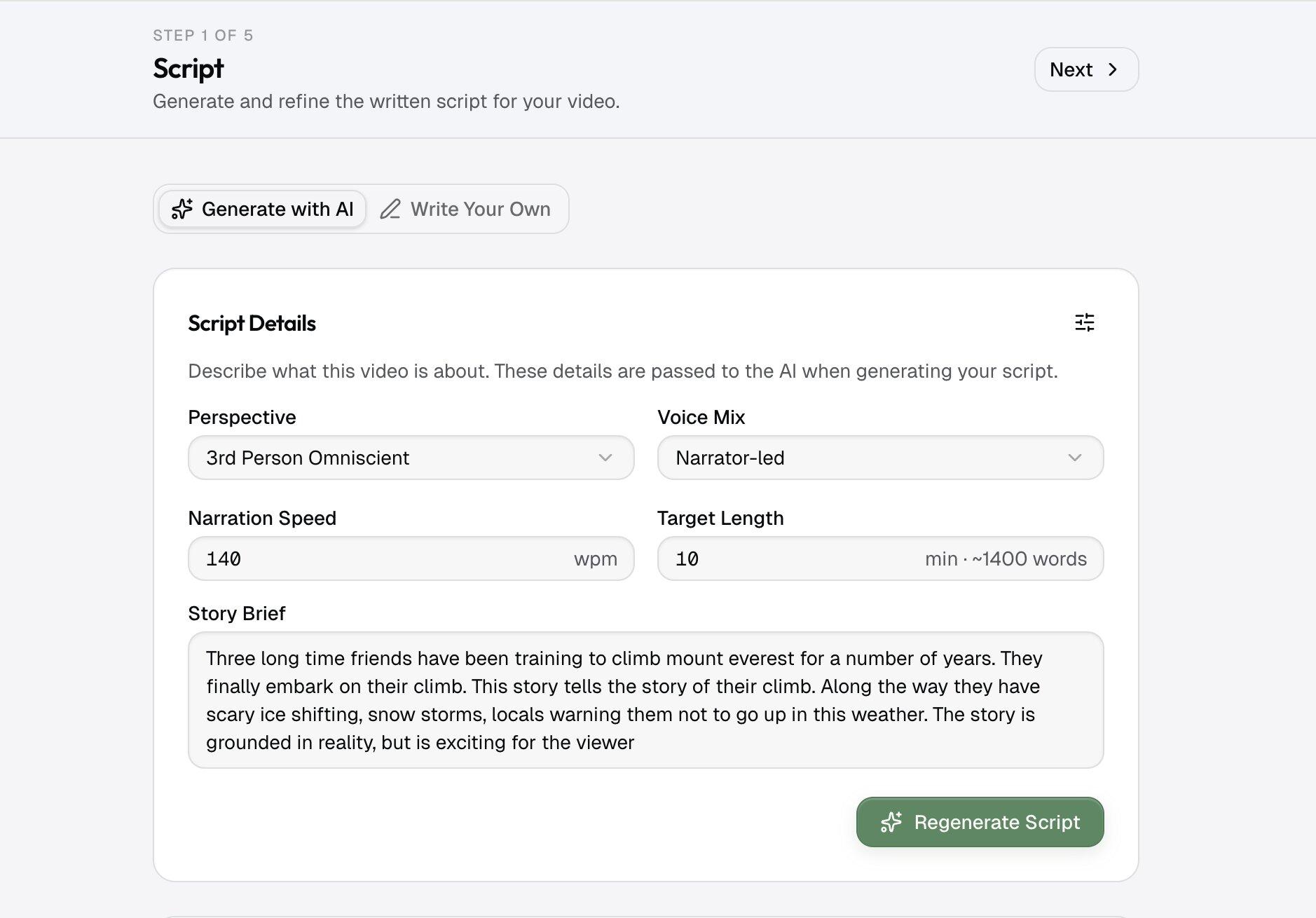
- Step 01
Brief becomes script
Hand it a topic line or paste a script you already have. The writing model drafts retention-paced narration for a full-length video — not a 60-second hook — and marks every person and place it needs to keep on screen.
- Step 02
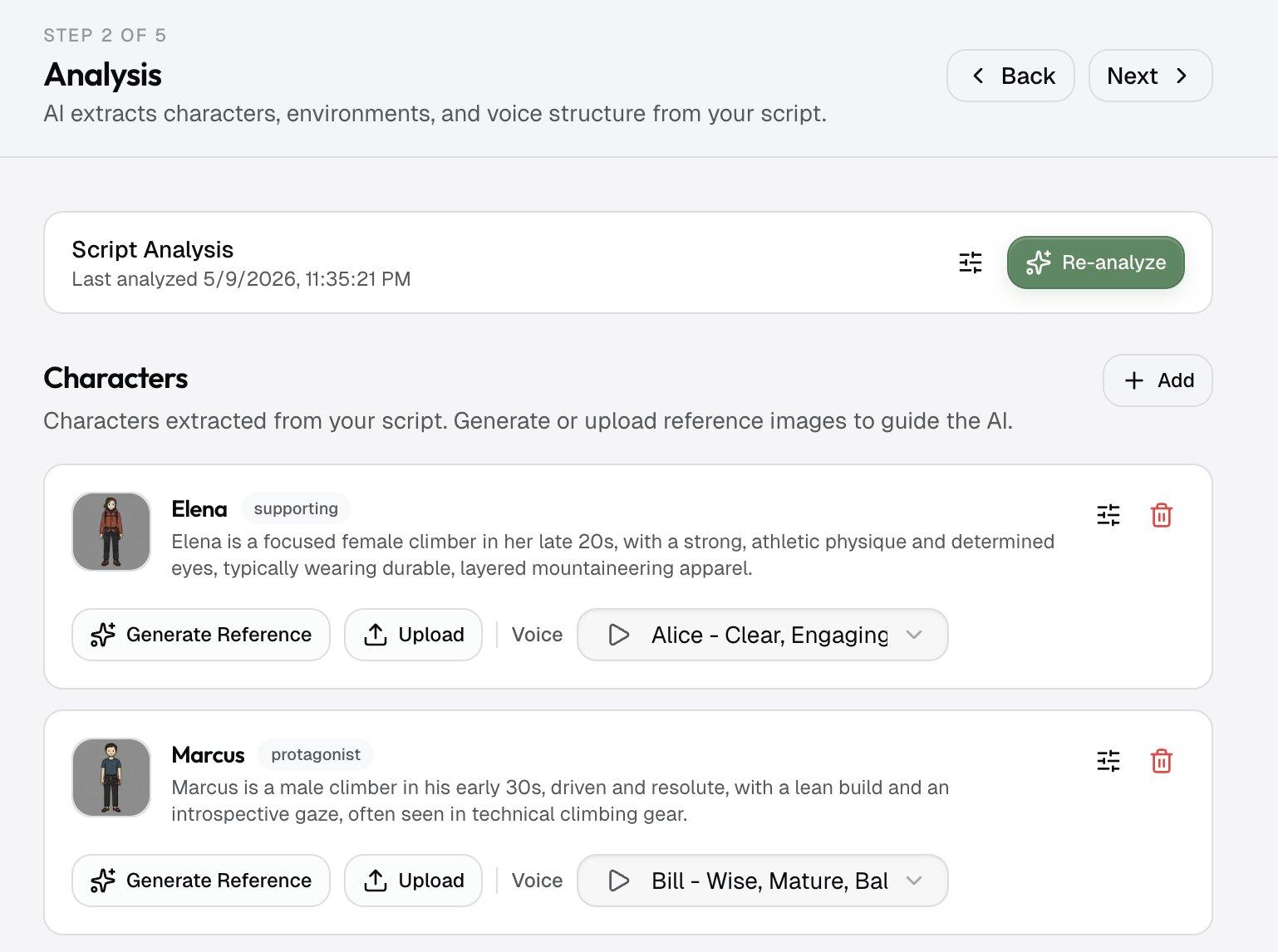
Cast and world get pinned
Before a single shot renders, each character and location becomes an approved reference frame. That frame — not a stock clip — is what every later image is held against, so the look stays put across an entire episode.
- Step 03
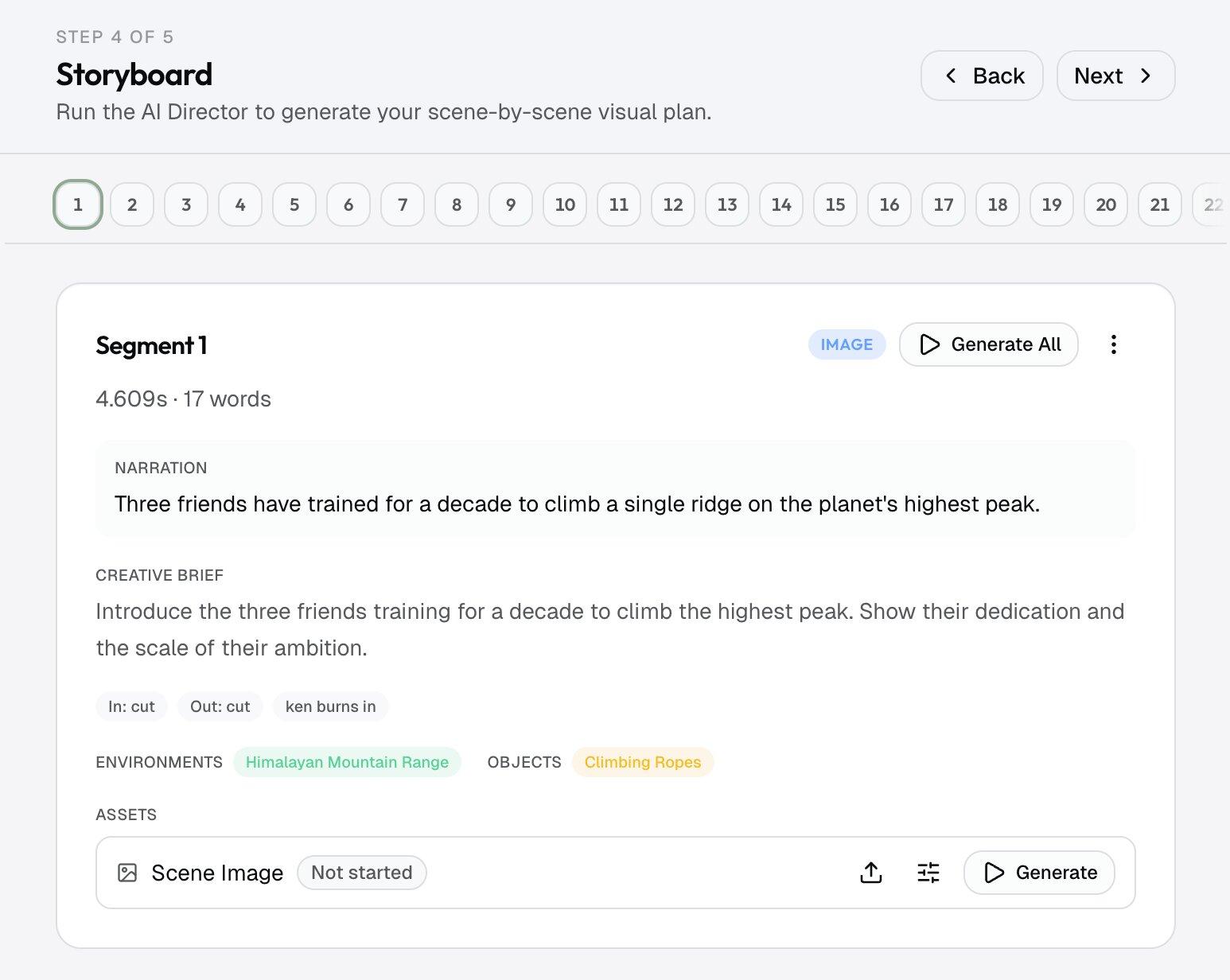
Shots build on the references
The narration is split into timed beats, and each beat gets a frame composed against the pinned cast and world, then set in motion. A narrator voice you choose reads the script — not flat stock text-to-speech.
- Step 04
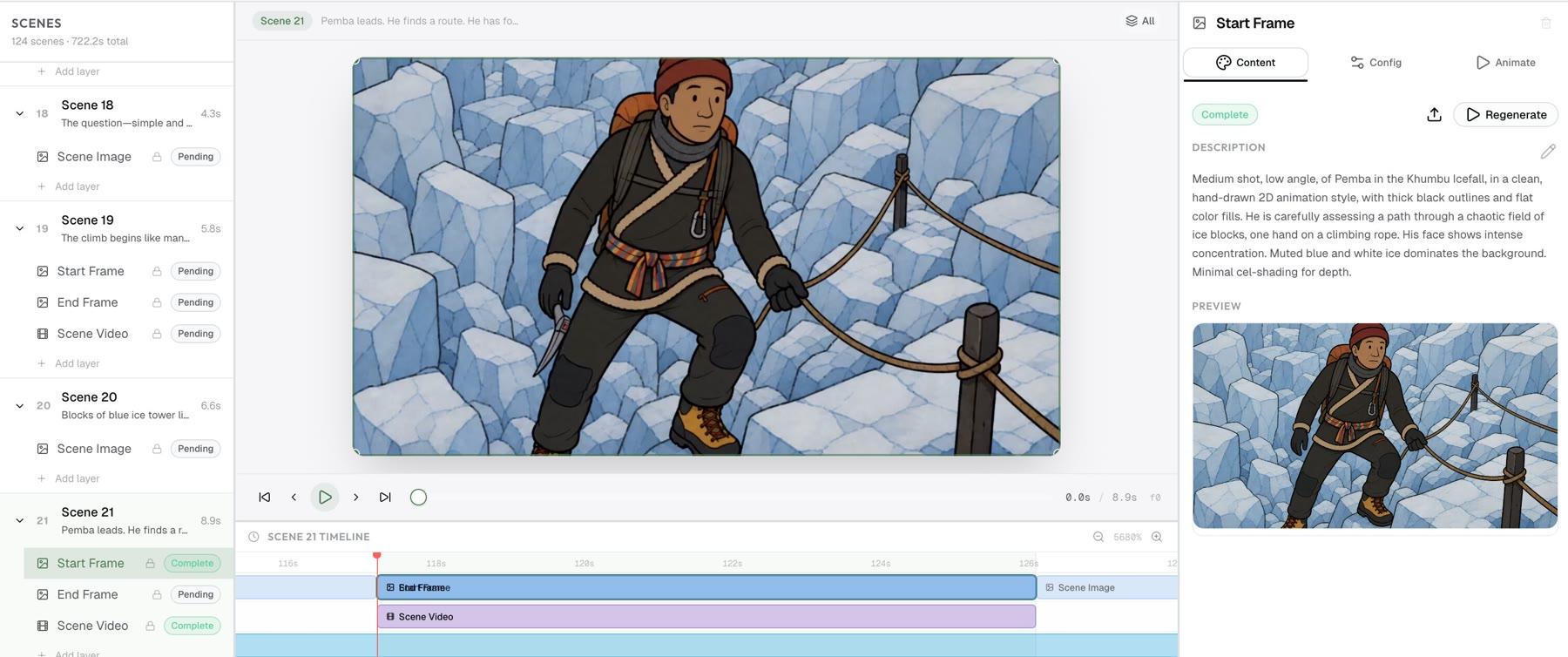
Cut, caption, export
Captions, music, and sound effects drop onto the timeline, and the whole thing renders to a clean, watermark-free MP4 you own — ready to upload as a full YouTube video, not a clip.
Automation got you posting — it won't get you watched
Why creators look for an AutoShorts alternative.
AutoShorts generates and auto-publishes faceless shorts to TikTok, Reels, and YouTube on a schedule. The ceiling is the template. Public reviews repeat the same three things — scripts and visuals repeat across videos, images are static rather than animated, and fully-automated series often stall at single-digit views. One content series at a time, 90 seconds at most.
Framesail is built for what comes after that ceiling: real long-form videos where your characters hold shot to shot, your look is reverse-engineered into reusable style DNA, and the faceless channel you're building has a look the feed hasn't seen a thousand times already.
AutoShorts creator questions
AutoShorts alternative, answered straight.
Is AutoShorts worth it?
It generates and auto-publishes templated shorts to TikTok, Instagram Reels, and YouTube Shorts on a schedule — and the recurring public complaints are the flip side of exactly that automation: output built from shared templates and stock reads repetitive across channels, visuals lean on static images, you're limited to one content series at a time, and many users report weak view counts on fully-automated content. Automated posting only pays off if the videos themselves earn views — and that's a distinctiveness problem templates can't solve. For a channel with its own look — especially long-form — it's the wrong category.
Does AutoShorts make long-form YouTube videos?
No. AutoShorts generates short vertical clips — roughly 30 to 90 seconds — for Shorts, TikTok, and Reels. There is no long-form mode. That's the fundamental difference: Framesail is built for full-length YouTube videos, where a script becomes a storyboard of dozens of shots that all have to hold the same characters, environments, and style. Long-form is where watch time, mid-roll ads, and higher RPMs live — it's a different product category, not a feature toggle.
AutoShorts vs Framesail — which should I use?
They're different bets on how a faceless channel wins. AutoShorts bets on volume: many templated shorts, posted automatically, minimal effort per video. Framesail bets on the video: fewer, longer, higher-production videos with a consistent cast and a style that's recognizably yours. Plenty of creators run both strategies on different channels. If your niche rewards distinctive long-form — documentaries, explainers, story channels — that's Framesail's home turf.
Can Framesail auto-post to TikTok and YouTube like AutoShorts?
No — Framesail exports a clean, watermark-free MP4 and you publish it yourself, or drive the whole pipeline from an agent via MCP and the API and script your own publishing step. That's a deliberate trade: auto-posting is only as valuable as the videos being posted, and fully-automated template output is exactly what users report stalling at single-digit views. Framesail puts the effort where views actually come from — the video — and leaves publishing under your control.
Why does templated shorts content underperform?
Sameness. When hundreds of channels generate from the same templates, stock clips, and caption styles, viewers and platforms both learn to recognize it — public reviews of auto-shorts tools repeatedly mention repetitive scripts, reused visuals, and single-digit view counts on fully-automated series. Distinctiveness is the lever: a look, a recurring cast, and pacing that belongs to one channel. That's the problem Framesail's style analysis and reference-locked characters exist to solve.
Can I use Framesail videos commercially?
Yes. Every paid Framesail tier includes a full commercial license covering monetized channels, ads, sponsorships, and client work, with clean watermark-free MP4 export. The license is the same across Creator, Pro, and BYOK — not an upsell.
More on the main FAQ page.
Build the channel templates can't.
Run one real brief through the full pipeline and compare a long-form, reference-locked video to a templated short — clean export, commercial license included.
Framesail is an independent product and is not affiliated with, endorsed by, or sponsored by AutoShorts. AutoShorts is a trademark of its respective owner; comparisons reflect publicly available information as of mid-2026.