Framesail — the best
Katalist AI alternative.
We built Framesail because a storyboard is a plan, not a published video. It's the Katalist AI alternative that keeps going after the board — script, voiceover, storyboard, and a finished long-form YouTube video, with the same locked cast in every panel and every shot.
What changes when you switch
The storyboard stops being the finish line.
We're built to do what Katalist does — we just don't stop at the board. Four stations around it, each editable before the next runs, and everything downstream renders against the references you locked.
- Step 01
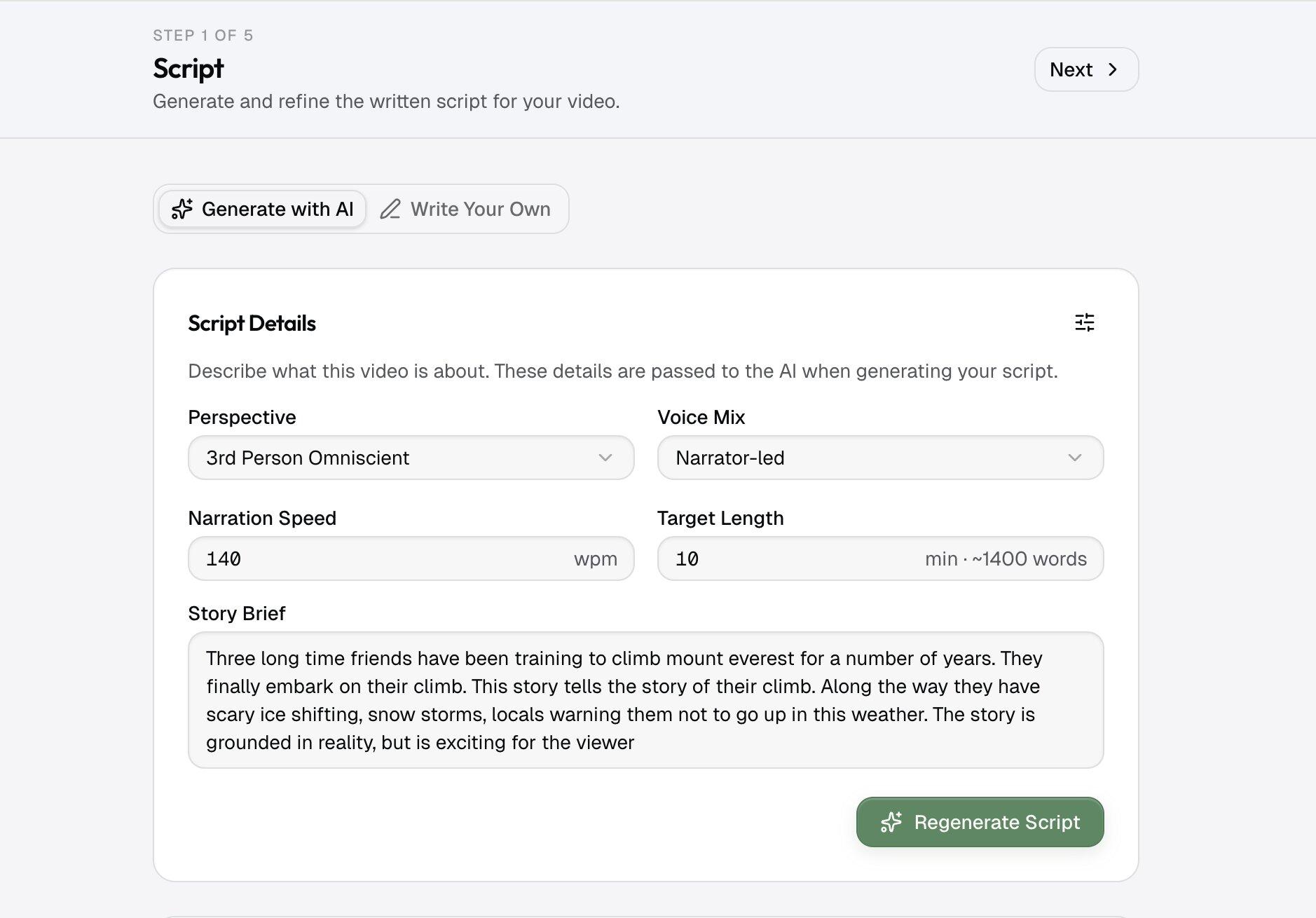
Script
Start from a one-line brief or paste a finished script. The script station tags the characters, environments, and objects every scene needs, so the storyboard downstream knows the cast before it draws a panel.
- Step 02
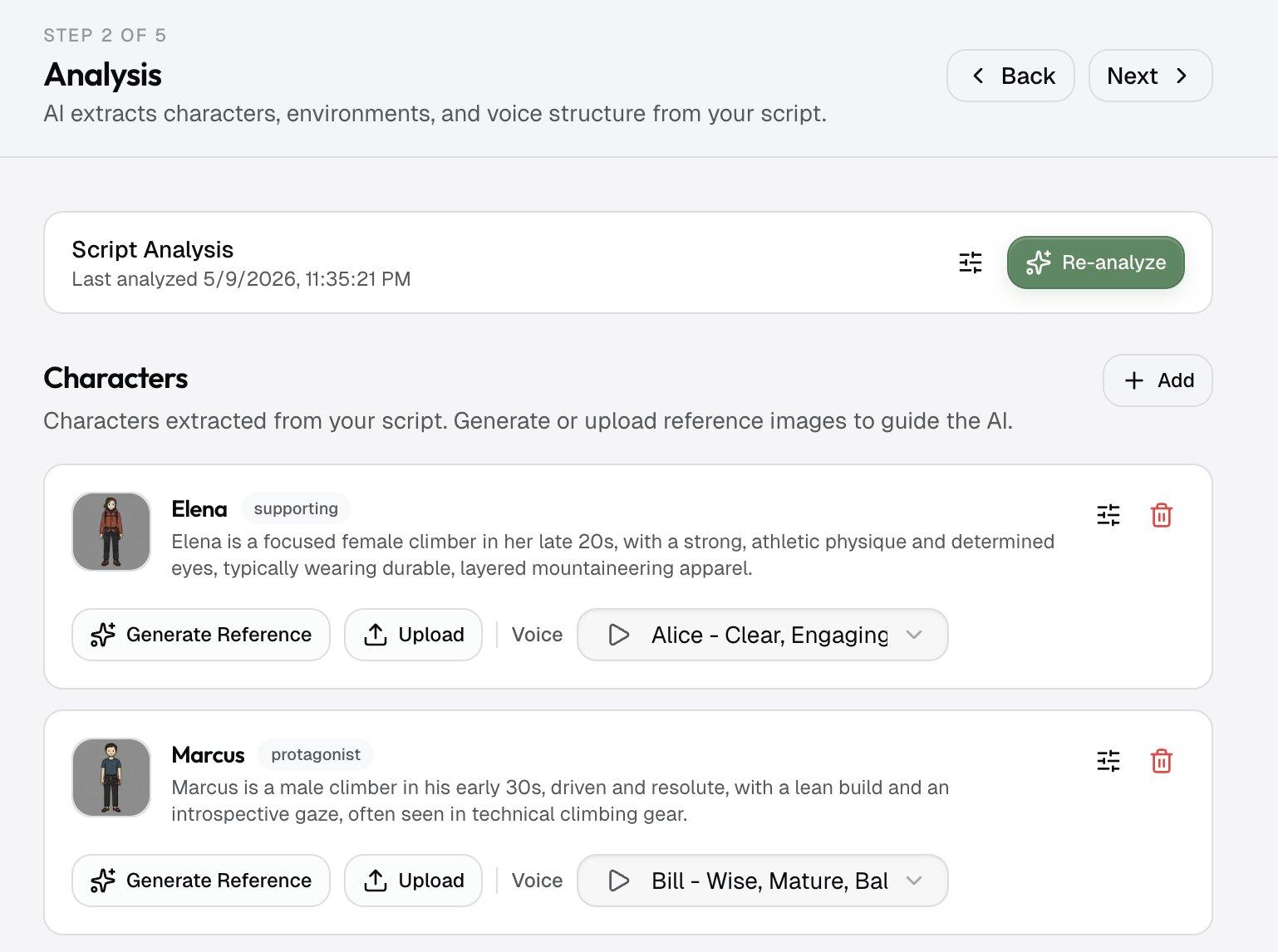
Locked references
Each character and environment gets a reference image you approve once. Every storyboard panel and every rendered shot pulls those same references, so the cast in panel 30 matches panel 1.
- Step 03
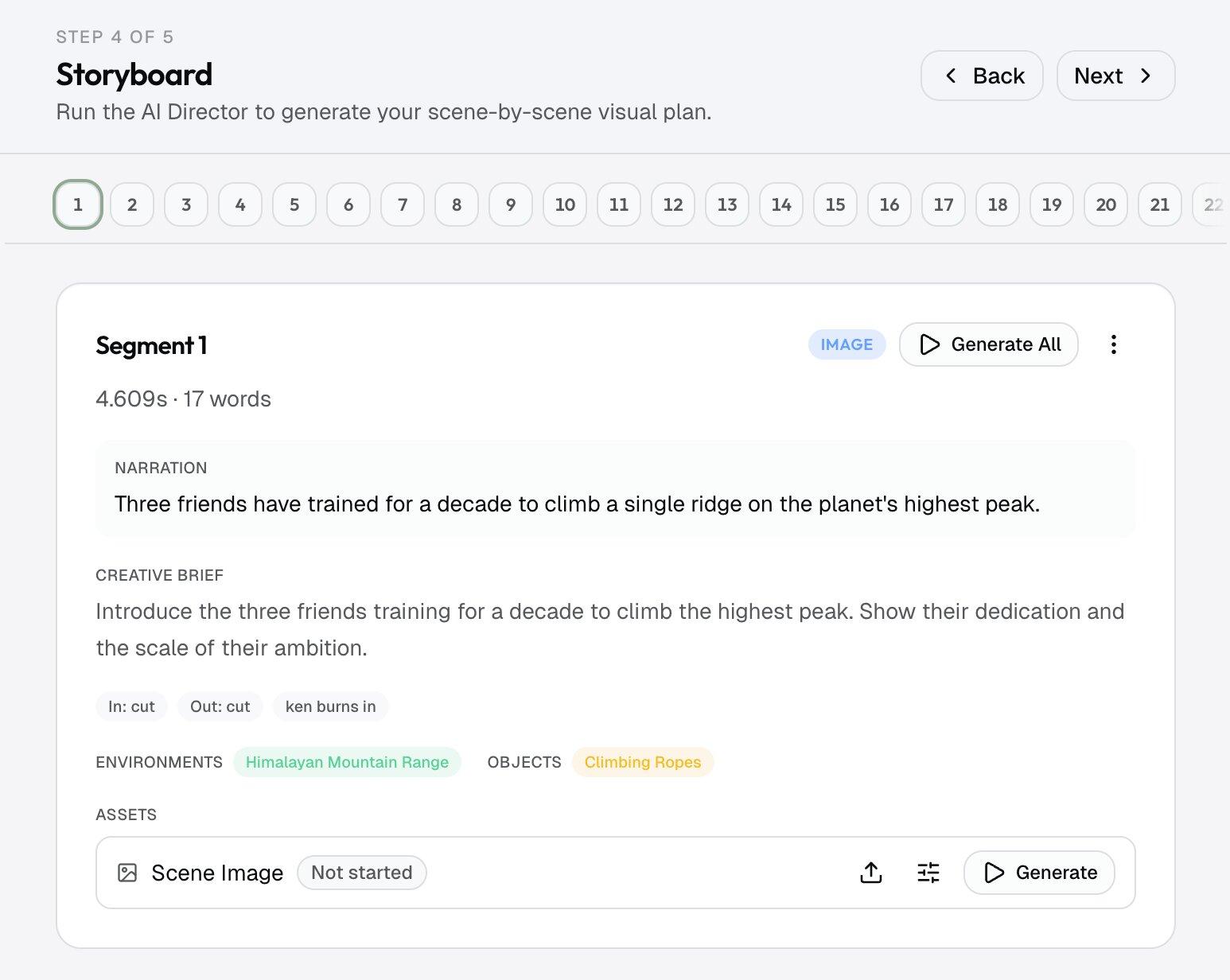
Storyboard, timed to voice
The AI Director writes each panel against the rendered voiceover: narration slice, creative brief, transitions, motion, and asset tags. You review and edit the plan while it's still cheap to change.
- Step 04
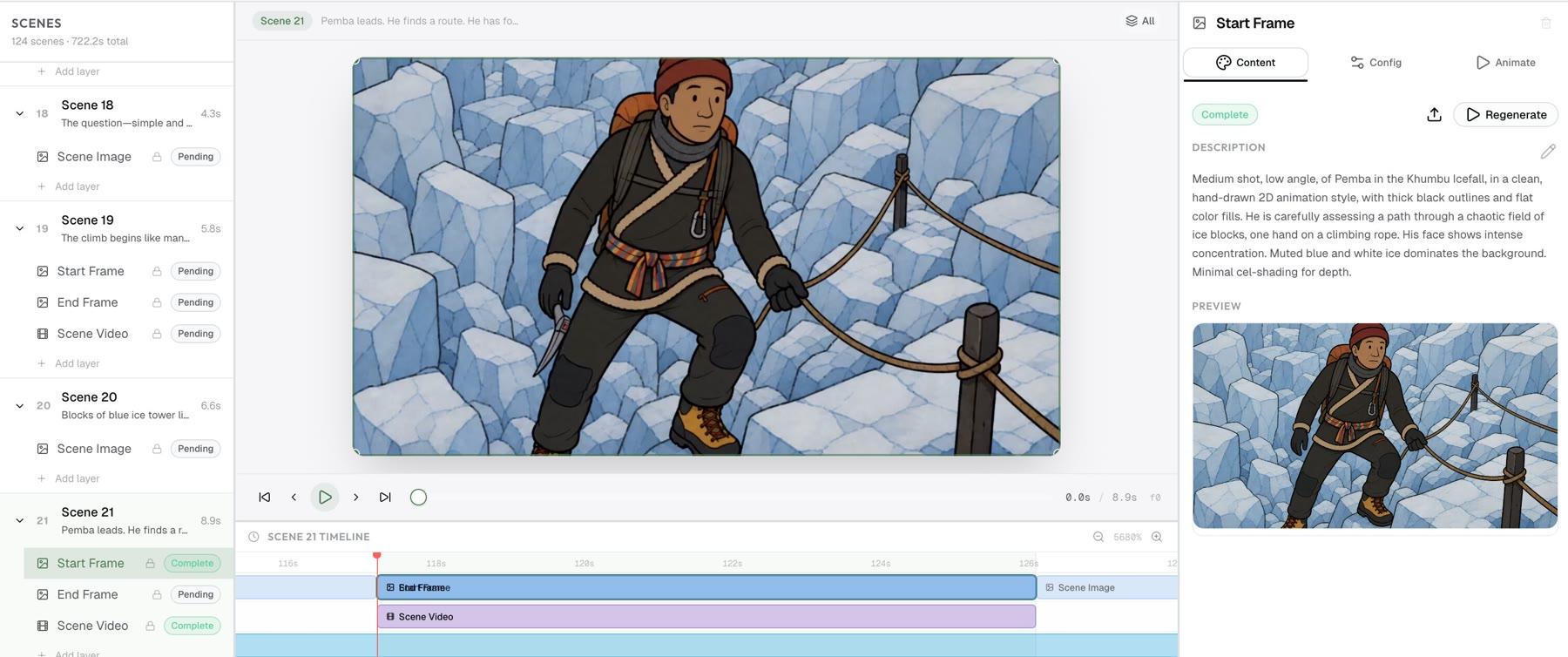
Final video
Panels render and animate on the model you pick — Veo 3.1, Kling v3, or Seedance 2 Pro — then get cut with titles, captions, and lower thirds. Export the MP4 and upload it, or finish in Premiere or DaVinci.
Katalist AI vs. Framesail
An honest side-by-side.
Different jobs, honestly stated. Katalist points at visual storytelling and pre-production. This is for operators whose finish line is a published long-form video.
| Dimension | Katalist AI | Framesail |
|---|---|---|
| Built around | A storyboard you present | A channel you publish |
| The deliverable | Boards, decks, and videos produced from them | A finished long-form YouTube video, watermark-free MP4 |
| Panel timing | Sequenced from the script | Timed to the rendered voiceover, second by second |
| Style | Set per project | Channel style DNA, reverse-engineered once and reused every episode |
| Custom characters | Capped per tier (1 on the entry plan, as of July 2026) | Every character is a locked reference — no per-plan cap |
| For developers | Premiere and PowerPoint hand-offs | API + MCP — agents can run the whole pipeline |
What you get switching to Framesail
From pre-production to publish.
The board is a station, not the product
In Framesail the storyboard sits between a rendered voiceover and the final edit. Every panel carries its narration slice, brief, and references — and generates the actual shot that lands on the timeline.
Channel style, not project style
Point style analysis at your channel or references once, and every episode renders against the same art, narration, and editing DNA. A channel reads as a brand because the style survives between videos.
Operator-grade output
Retention-paced long-form, cut density set by your director style, clean watermark-free export, and a full commercial license on every paid tier. Built for publishing, not pitching.
Why operators look for a Katalist AI alternative
A great board is not a published channel.
Katalist is a storytelling studio pointed at filmmakers, advertisers, and pitch decks: script in, storyboard out, presentation-ready. The limit shows up when the goal isn't a deck — it's a channel that ships a retention-paced, 10-plus-minute video every week in a style viewers recognize.
Framesail was built for that job. The storyboard reads a script from the script station, times every panel to the rendered voiceover, and hands each one to generation with locked character references — the same architecture behind the storyboard AI station itself.
Operator questions
Katalist AI alternative, answered straight.
Is Framesail a good Katalist AI alternative?
It depends on your deliverable. Katalist is oriented around visual storytelling for filmmakers and advertisers — storyboards, decks, and videos produced from them. Framesail is built for operators publishing long-form faceless YouTube: the storyboard is one station in a pipeline that starts at the script and ends at a finished, watermark-free video timed to a rendered voiceover.
What's the difference between Katalist AI and Framesail?
Orientation. Katalist starts from the storyboard and works outward — script to board, board to presentation or video. Framesail starts from the channel: a reusable style, locked character and environment references, a voiceover-timed storyboard, and a final edit with retention pacing set by your director style. One is built to visualize a story; the other is built to run a channel.
Does Framesail generate storyboards too?
Yes — it's a full pipeline station. The AI Director reads your script and voiceover and writes a scene-by-scene plan with a creative brief, transitions, motion, and tagged references per panel. The difference is what happens next: every panel generates the actual shot in the finished video. See the storyboard AI page for the details.
Is there a free Katalist AI alternative?
Not a genuinely free one — quality generation runs on frontier models that cost real money per render. Framesail is paid, with a bring-your-own-keys option if you'd rather pay the model providers directly. Katalist sells credit-metered tiers with a 7-day trial, as of July 2026. Either way, the realistic question is output per dollar, not zero dollars.
How does character consistency work?
Through locked references, not a per-plan character allowance. Characters, environments, and objects are created once as reference images, and every panel and shot that features them pulls the same references into generation. There's no cap on how many characters a project can carry.
Can I use the videos commercially?
Yes. Every paid Framesail tier includes a full commercial license — monetized channels, ads, sponsorships, and client work — with clean watermark-free export. It's the same license on every tier, not an upgrade.
More on the main FAQ page.
Storyboard it. Then ship it.
The fairest comparison is a finished video of your own — clean export, no watermark, yours to publish.
Framesail is an independent product and is not affiliated with, endorsed by, or sponsored by Katalist. Katalist is a trademark of its respective owner; comparisons reflect publicly available information as of July 2026.