Framesail — the best
Crayo alternative.
We built Framesail because templated shorts hit a ceiling — the same shared styles ship on thousands of channels, and there's no long-form mode when you outgrow the format. Framesail is the Crayo alternative for what comes next: long-form YouTube with your own style and a reference-locked cast.
What you get switching to Framesail
Your channel's look, not a library's.
For the channel after the clip channel
Crayo makes templated shorts, full stop. But shorts channels hit a ceiling — RPMs are thin, and the format can't build the watch time long-form does. Framesail is the next rung: full-length videos with a script, a cast, and a style, built by a pipeline instead of a template.
A look no other channel is generating
Template libraries have a structural problem reviewers keep naming: everyone using the same fifteen styles ships videos that look the same. Framesail doesn't have a template library. It reverse-engineers a style from your references — your published videos, images, or any YouTube link — and generates every shot against it.
Characters that exist across shots
Clips don't need continuity; episodes do. Framesail pins every character, environment, and recurring prop to an approved reference image and renders each shot against it, so the narrator's face in minute nine is the face from minute one. There's no equivalent concept in a clipping tool.
One balance, visible costs
Crayo meters usage across several separate pools — workflow credits, export minutes, voiceover minutes, image counts — and any one of them can run dry while the others sit full. Framesail runs one credit balance, shows the per-action cost before you click, rolls credits over, and offers a BYOK plan with no token markup for volume creators.
Crayo vs. Framesail
An honest side-by-side.
Different formats, different bets. Crayo optimizes clip volume; Framesail optimizes the video. Pick by the channel you're actually building.
| Dimension | Crayo | Framesail |
|---|---|---|
| Video format | Short-form clips for TikTok, Reels, and Shorts | Long-form YouTube — full episodes, not clips |
| Best at | Templated shorts in minutes — Reddit stories, fake texts, split-screen | Directed videos with a look that belongs to your channel |
| Visual identity | A shared library of viral templates | Style DNA reverse-engineered from your own references |
| Continuity | No characters to keep consistent — clips are one-offs | Reference-locked cast, environments, and props across the video |
| Creative control | Pick a template, tweak captions and voice | Every prompt, model, and setting editable at every stage |
| Usage mechanics | Multiple separate meters — credits, export minutes, voiceover minutes, images | One credit balance; per-action cost shown before you generate |
| Own-keys option | None | BYOK plan: your provider keys, no token markup |
| Agent control | None | Full MCP server + API — an agent can drive the pipeline |
| Export & license | Clip exports metered by plan | Watermark-free MP4 + full commercial license, every paid tier |
What changes when you switch
From picking a template to directing a video.
You lock a cast, a world, and a style once — and every shot of a full-length video renders against them. Each stage is editable before the next runs.
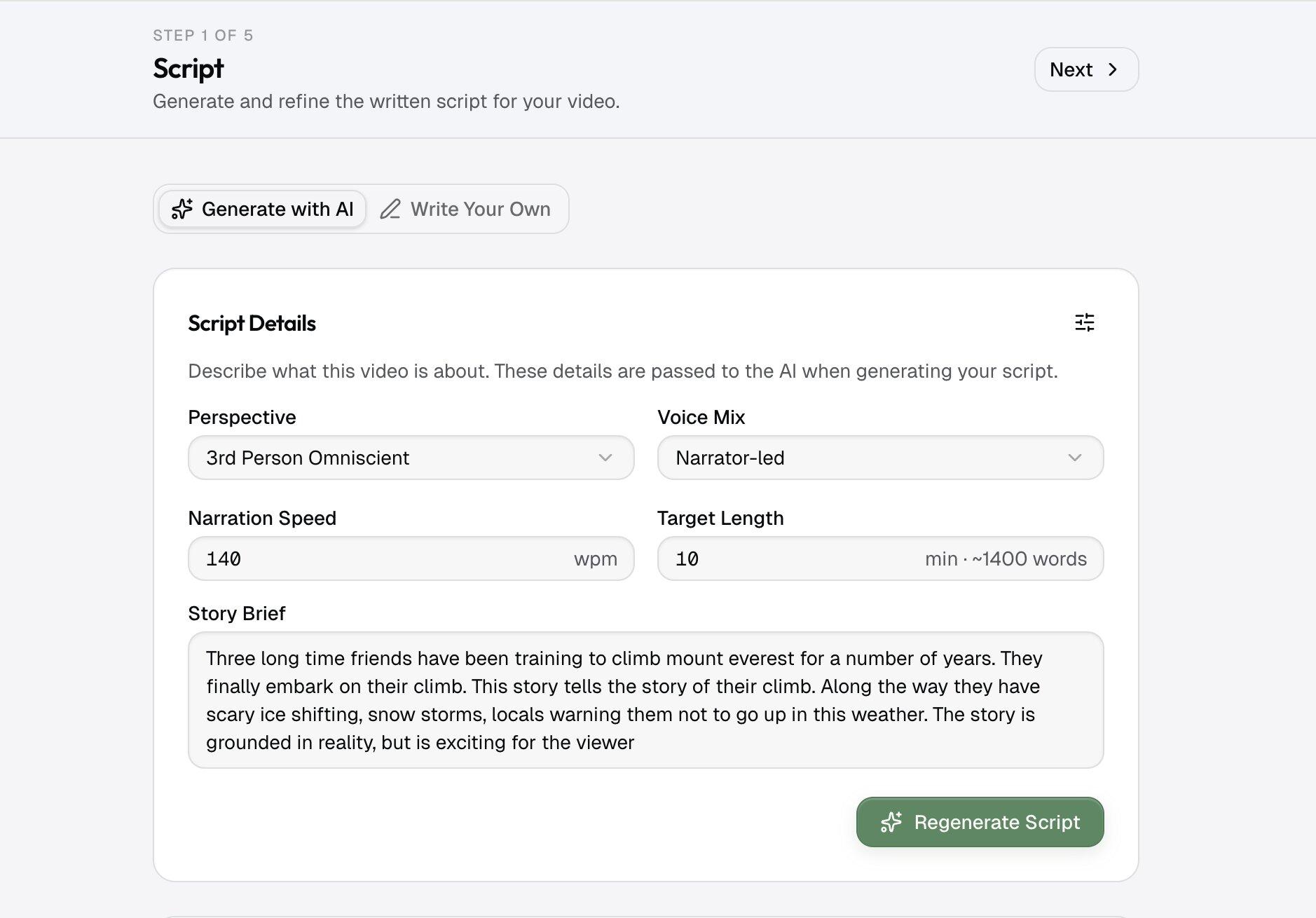
- Step 01
Brief becomes script
Hand it a topic line or paste a script you already have. The writing model drafts retention-paced narration for a full-length video, then marks every person and place it needs to keep on screen.
- Step 02
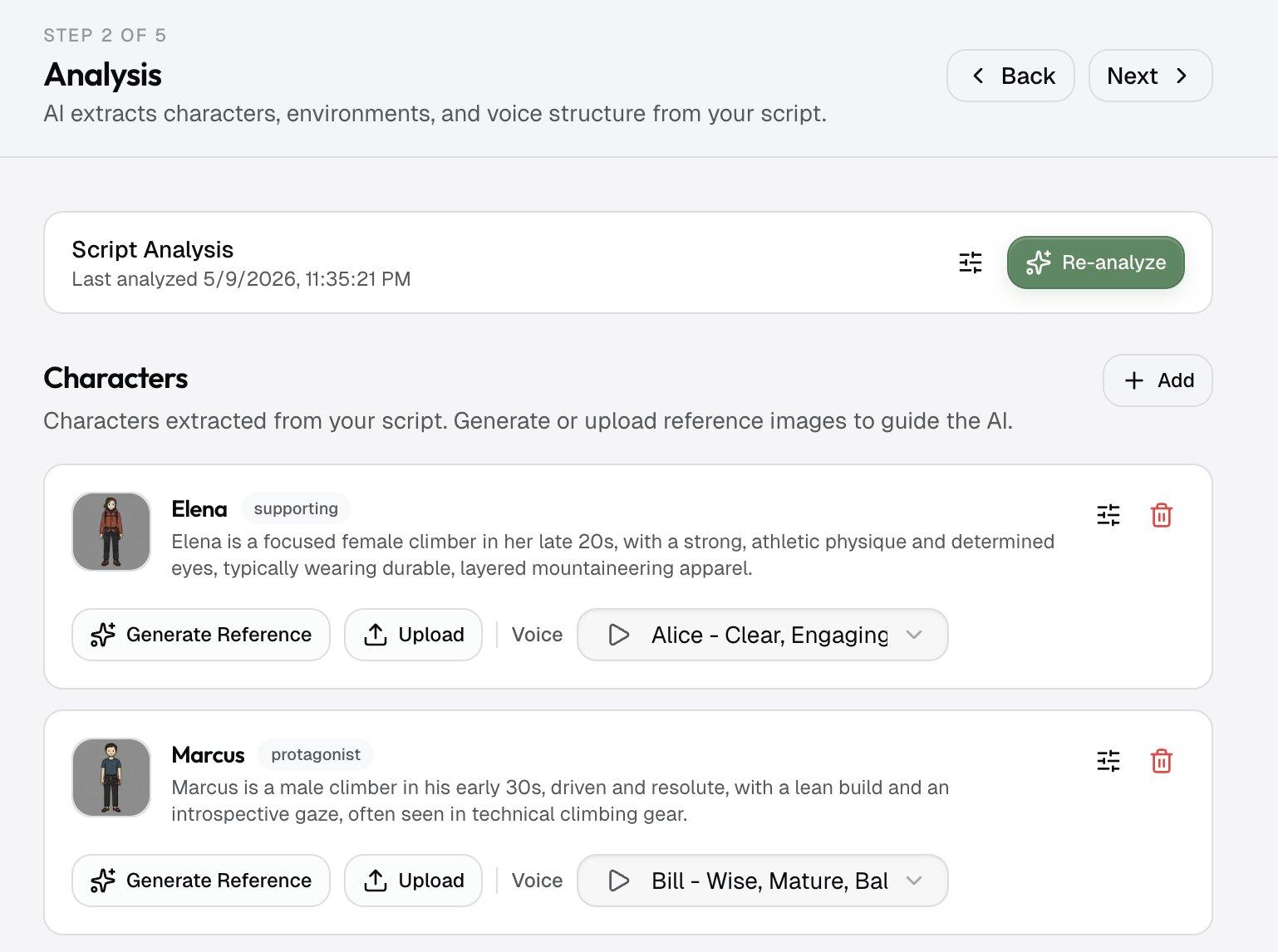
Cast and world get pinned
Before a single shot renders, each character and location becomes an approved reference frame. That frame — not a template — is what every later image is held against, so the look stays put across an entire episode.
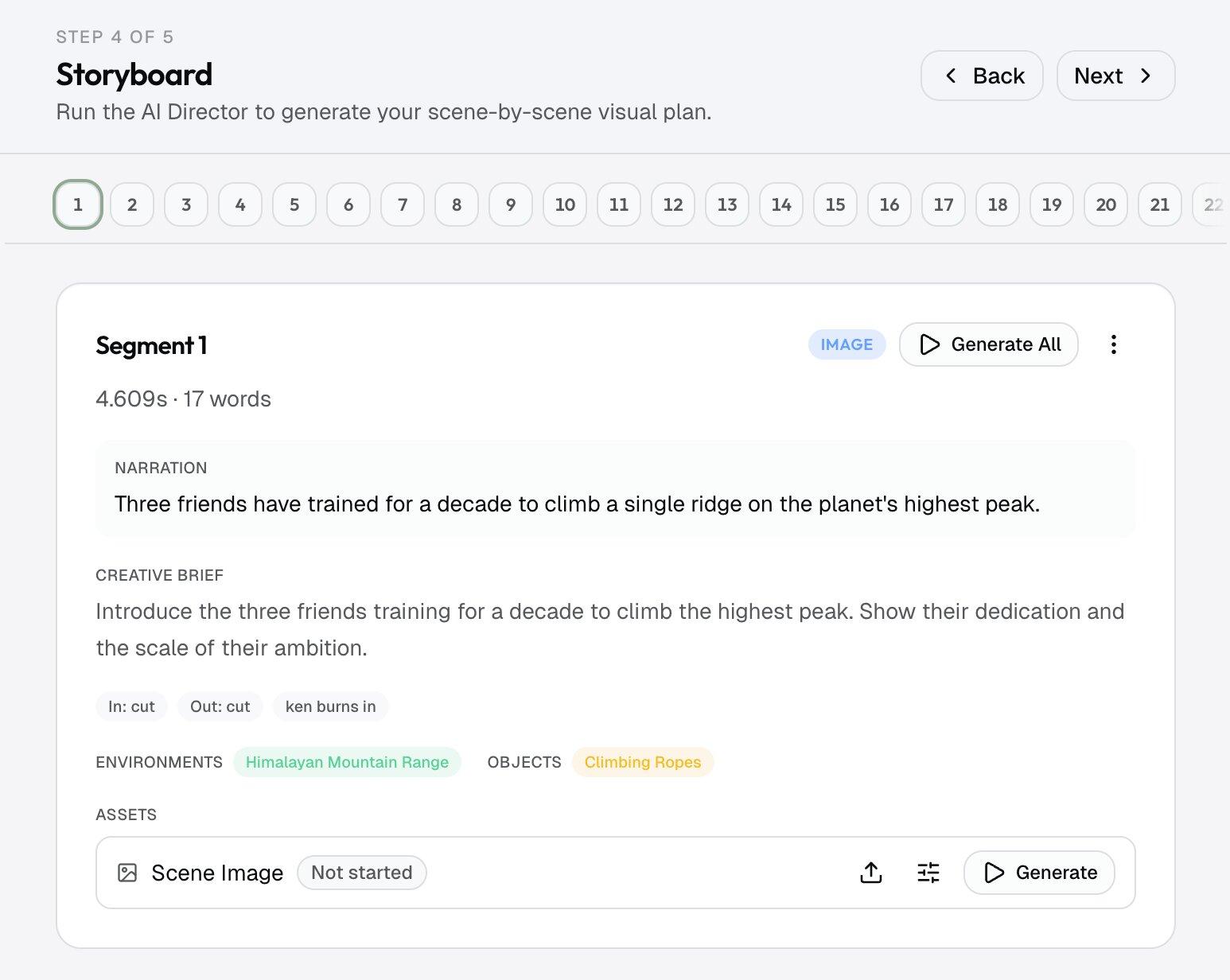
- Step 03
Shots build on the references
The narration is split into timed beats, and each beat gets a frame composed against the pinned cast and world, then set in motion with the video model you choose. A narrator voice you pick reads the script.
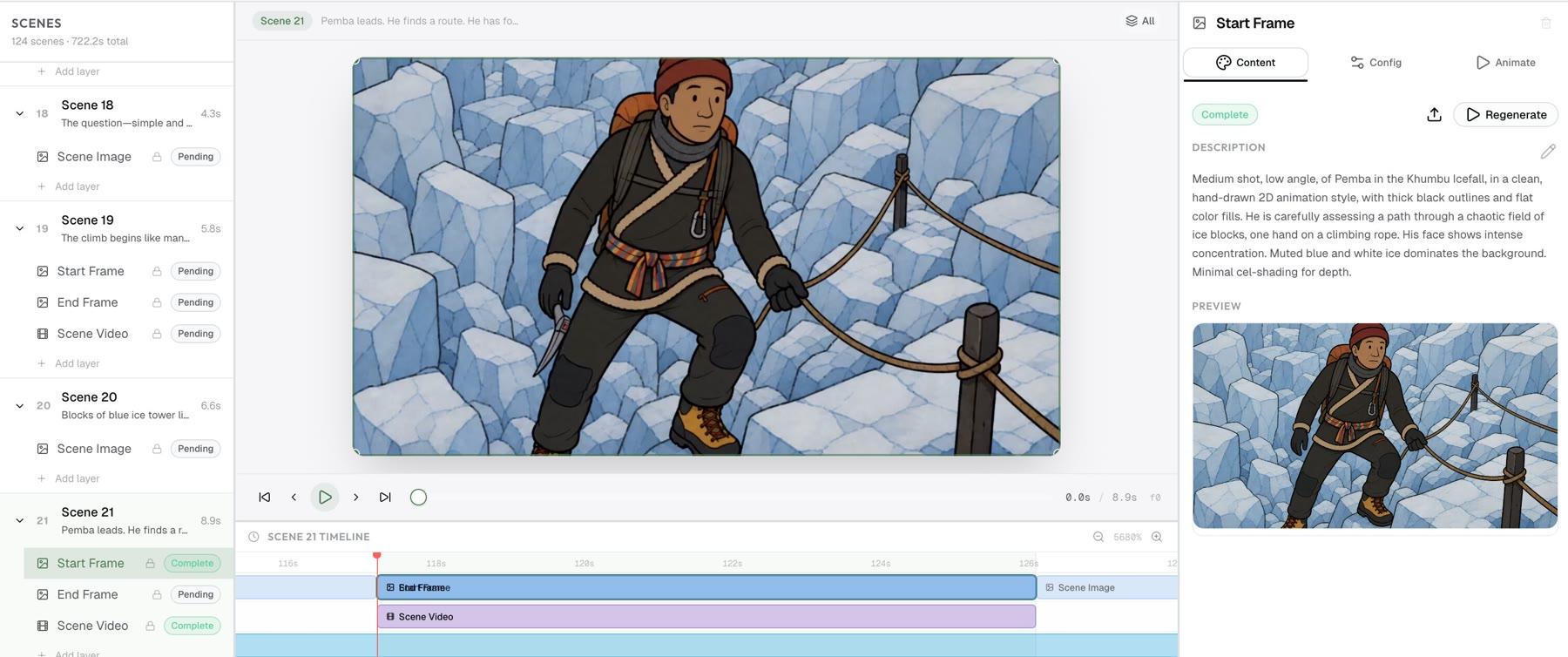
- Step 04
Cut, caption, export
Captions, music, and sound effects drop onto the timeline, and the whole thing renders to a clean, watermark-free MP4 you own — a full YouTube video, ready to upload.
Templates scale output — they can't scale identity
Why creators look for a Crayo alternative.
Crayo is a template library: pick a viral format — Reddit stories, fake texts, split-screen — and a finished short comes out in minutes. The structural catch shows up in public reviews: templates shared across thousands of channels produce output that looks nearly identical between users, usage is split across several separate meters, and there's no long-form mode at all. When the goal shifts from clip volume to a channel with its own identity, the tool category has to shift too.
Framesail is that shift. Your look is reverse-engineered into reusable style DNA, your characters lock to reference images that hold across a full-length video, and every prompt, model, and setting in the faceless pipeline is yours to direct.
Crayo creator questions
Crayo alternative, answered straight.
Is Crayo good for faceless content?
It makes templated shorts — Reddit stories, fake texts, split-screen — quickly. The trade-off is the template itself: reviewers consistently note that output looks nearly identical across the many channels using the same styles, and usage is metered across several separate pools (workflow credits, export minutes, voiceover minutes, image counts) that can each run dry independently. It also has no long-form mode at all — which makes it the wrong category for a channel built on full-length videos with their own look.
Why do creators outgrow Crayo?
Two walls. The first is distinctiveness: when thousands of channels generate from the same template library, the feed learns to scroll past the look — sameness is the most repeated criticism of template-based tools in public reviews. The second is format: shorts monetize thinly, and the channels that compound on YouTube are built on long-form watch time. Both walls are structural to the category, not flaws in Crayo specifically — which is why the answer is a different kind of tool, not a better template.
Crayo vs Framesail — which should I use?
Different formats, different bets. Crayo is for short-form volume: templated vertical clips, shipped fast and cheap. Framesail is for long-form YouTube: a script becomes a storyboard of dozens of shots that hold the same characters, environments, and style for ten-plus minutes, with every prompt and model under your control. If you're building the kind of channel clips channels wish they were — long-form, distinctive, monetizable — that's Framesail.
Does Framesail have templates like Crayo?
No, deliberately. Instead of picking from a shared library, you point Framesail's style analysis at references — your published videos, images, or any YouTube link — and it reverse-engineers the look, narration voice, and pacing into reusable style DNA for your channel. Presets exist to start from, but they become your own editable style, not a shared template whose output ships on a thousand other channels.
Is there a free Crayo alternative for long-form?
Not a genuinely free one worth running a channel on. Long-form AI video runs on frontier image and video models that cost real money per render, so serious tools are paid. Framesail's BYOK plan is the closest thing to cutting out the middleman: bring your own provider keys and pay them directly, with no token markup added.
Can I use the videos commercially?
Yes. Every paid Framesail tier includes a full commercial license covering monetized channels, ads, sponsorships, and client work, with clean watermark-free MP4 export. The license is the same across Creator, Pro, and BYOK — not an upsell.
More on the main FAQ page.
Build the video templates can't.
Run one real brief through the full pipeline and compare a long-form, reference-locked video to a templated clip — clean export, commercial license included.
Framesail is an independent product and is not affiliated with, endorsed by, or sponsored by Crayo. Crayo is a trademark of its respective owner; comparisons reflect publicly available information as of mid-2026.